How WSE-3 and Codex-Spark Break the NVIDIA CUDA Monoculture
I’ve spent the last eight years building inference infrastructure. Eight years of fighting CUDA compatibility issues, debugging driver version mismatches, and watching budget evaporate into NVIDIA’s pricing premium. The CUDA tax isn’t just a line item—it’s a strategic constraint that shapes every architecture decision we make. Every time we provisioned a new cluster, we accepting the NVIDIA ecosystem lock-in: the Mellanox networking markup, the enterprise support contracts, the perpetual driver update cycles that break production environments at the worst possible moments. So when Cerebras dropped the WSE-3 with a 21 petabytes per second memory bandwidth figure, I had to dig in. This isn’t marketing fluff. This is the beginning of a fundamental shift in how we think about AI compute.
The Memory Wall Is Real—and It’s Killing GPU Efficiency
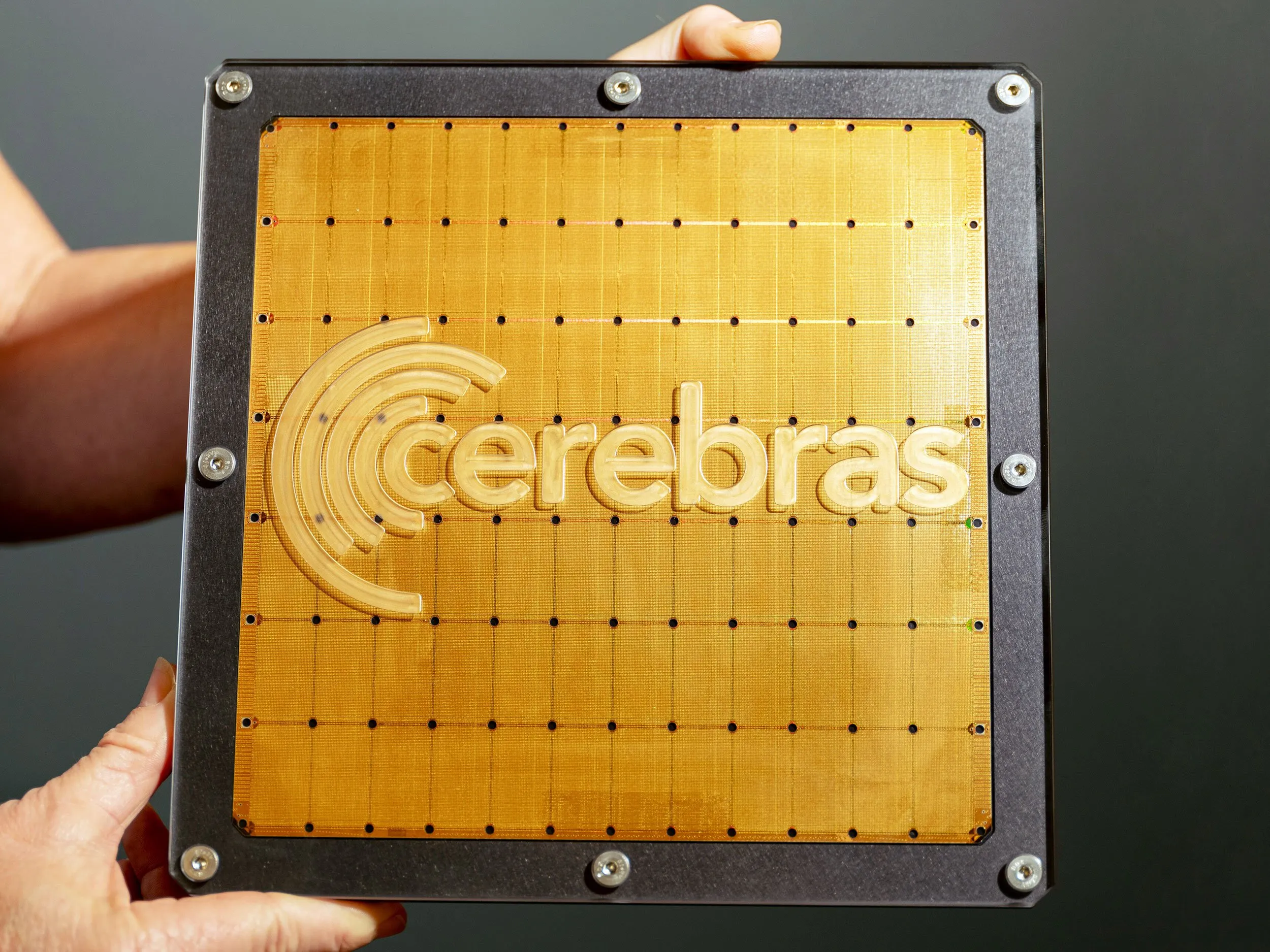
Let me explain what’s actually happening with that 21 PB/s number, because it represents something NVIDIA’s HBM4 architecture can’t touch. The WSE-3 packs 44GB of on-chip SRAM directly adjacent to 900,000 cores. That’s not off-chip memory with latency penalties. That’s SRAM sitting millimeters from compute, and the bandwidth reflects that physical reality.
NVIDIA’s Blackwell B200 relies on HBM4 memory, which is impressive technology but fundamentally different. HBM4 offers substantial capacity—192GB in the B200 configuration—but the memory lives on a separate stack with physical distance to traverse. When you’re running a 70B parameter model and every token generation requires accessing weights across the entire model, that memory hierarchy matters. The bus contention on HBM systems under heavy inference loads is real. I’ve watched production inference servers thermal throttle during burst traffic because HBM bandwidth saturates before compute does. That’s a structural problem, not a tuning problem. The cooling infrastructure groans, the power delivery circuits strain, and you still end up with GPU cores sitting idle waiting for data to arrive from memory. It’s the classic memory wall problem manifesting in real-time, and it costs real money in wasted compute cycles.
SRAM doesn’t solve every problem. It’s expensive and power-hungry per bit compared to DRAM or HBM. But for inference workloads where latency is the metric that matters—and it is, because token speed directly affects user experience and API costs—having compute and memory on the same silicon eliminates an entire class of bottlenecks. The WSE-3 architecture was designed for this specific problem: transformer inference where memory access patterns are predictable and bandwidth matters more than capacity.
CS-3 vs B200: The Numbers Don’t Lie
| Specification | Cerebras CS-3 (WSE-3) | NVIDIA B200 (Blackwell) |
|---|---|---|
| Architecture | Wafer-Scale Engine (Whole Wafer) | Chiplet GPU (Multiple Dies) |
| Core Count | 900,000 Compute Cores | ~208,000 CUDA Cores |
| Memory Bandwidth | 21 PB/s (On-chip SRAM) | ~8 TB/s (HBM4e) |
| Token Speed (70B) | ~1,800 tokens/sec | ~1,200 tokens/sec |
| Token Speed (405B) | ~500 tokens/sec | ~250 tokens/sec |
| Power Efficiency | ~15K W, optimized for inference | ~12K W, general-purpose |
These numbers tell a clear story. The WSE-3 doesn’t win on every dimension—power consumption runs higher, and the architecture is far less flexible for general-purpose GPU workloads. But for the specific task of inference at scale, the bandwidth advantage is decisive. When you’re paying per token in production, that 50% improvement in throughput on 70B models directly impacts operating costs.
The OpenAI Deal: What $10B Actually Buys
The OpenAI-Cerebras partnership announced as a $10B deal is the market validation that matters. This isn’t a research experiment. OpenAI is deploying Codex-Spark inference capacity—presumably to serve API customers at scale. Think about what that decision implies: a company with the most sophisticated ML engineering team on Earth chose wafer-scale architecture over the safety of NVIDIA’s ecosystem.
According to technical deep dives on the Cerebras blog, the architectural decision to keep weights on-wafer eliminates the per-token latency overhead inherent in multi-GPU clusters.
Codex-Spark specifically targets code generation workloads. This is important because code generation has distinct inference characteristics: long context windows, repetitive attention patterns, and deterministic compute requirements. The WSE-3’s on-chip SRAM is particularly well-suited for attention mechanisms where key-value caches must be accessed repeatedly per token. Running LLM inference on traditional GPUs involves constant traffic between compute and off-chip HBM, and that round-trip latency adds up across millions of tokens served daily. Each microsecond of memory latency compounds when you’re generating thousands of tokens per request, and that’s where wafer-scale architecture demonstrates its value.
The $10B figure represents committed capacity over multiple years. That’s not speculation—that’s infrastructure planning based on concrete performance metrics. OpenAI has seen the benchmarks, run their own internal comparisons, and decided the NVIDIA ecosystem premium isn’t worth it for inference workloads where Cerebras delivers superior token economics. They’re betting their production infrastructure on the proposition that Cerebras can deliver better price-performance at scale, and they have the engineering resources to validate that claim independently.
This partnership also signals something to the broader market: even the most NVIDIA-aligned company in the world is hedging. OpenAI’s relationship with NVIDIA is well-documented—they were among the first customers for A100s, H100s, and Blackwell. That they’re willing to diversify into Cerebras capacity tells you something about confidence in the CUDA ecosystem’s long-term pricing stability. When your biggest customer starts shopping elsewhere, it’s worth asking whether the premium you’re charging is sustainable.
ASICs Are Eating the Data Center—Starting With Inference
The broader trend here is the maturation of AI-specific silicon. For years, we’ve treated GPUs as general-purpose accelerators because early AI workloads were diverse and fast-moving. That’s changing. Inference at scale is a defined problem with measurable metrics: tokens per second, latency per token, cost per million tokens. When your workload becomes deterministic enough, purpose-built hardware starts making economic sense. We’ve seen this pattern before in networking—ASICs replaced FPGAs and general-purpose CPUs for packet switching once the protocols stabilized. The same logic applies to AI inference.
MatX, the AI infrastructure company, has been vocal about building purpose-built systems. Their approach centers on optimized networking and software stacks that extract maximum efficiency from specialized silicon. In my previous analysis of How MatX’s $500M Breakthrough Challenges the CUDA Monoculture, I discussed how MatX is challenging the status quo. Cerebras represents the extreme end of that philosophy—a chip so specialized it only does one thing, but does it better than anything else. The economic logic is straightforward: if you’re running 10,000 GPUs doing inference 24/7, a 30% efficiency gain across the fleet justifies architectural compromises. That’s millions of dollars in operational savings annually, and in a market where margins matter, those savings compound.
The shift toward ASICs also reflects a maturity in the AI infrastructure market. Early-stage AI companies needed flexibility—models changed weekly, new architectures emerged constantly, and the ability to reprogram your hardware was valuable. Now, with transformer-based models dominating production workloads, that flexibility is less critical. The inference patterns are well-understood, the attention mechanism is standardized, and the optimization opportunities are clear. This creates the conditions for specialization, which is exactly what Cerebras is exploiting.
What concerns me as an infrastructure engineer is the software ecosystem gap. NVIDIA’s CUDA ecosystem is mature, battle-tested, and supported by every ML framework. Cerebras’s software stack is improving but nowhere near as comprehensive. For organizations without dedicated hardware teams, that integration effort is a real cost. However, for companies like OpenAI who have the engineering resources to optimize around specialized hardware, the performance gains outweigh the integration complexity. The question becomes: where does your organization fall on that spectrum?
The Provocative Question: Is GPU-First Architecture Dead?
Here’s where I’ll go out on a limb. We’ve built entire infrastructure strategies around the assumption that GPUs are the universal substrate for AI. That assumption made sense when inference and training were intertwined, when models changed weekly, when flexibility mattered more than raw efficiency. Those conditions are dissolving. Training clusters and inference clusters have different operational characteristics, different performance requirements, and increasingly, different optimal hardware. Treating them as the same problem is an architectural mistake.
For new infrastructure investments, the calculus has shifted. If you’re building for inference specifically—and most organizations are, because that’s where the compute spend actually monetizes—a Cerebras-like architecture offers real advantages. The memory bandwidth differential alone translates to measurable cost savings at scale. The question isn’t whether ASICs compete with GPUs; it’s whether you can afford to ignore the efficiency gap while your competitors don’t. Every dollar spent on underutilized GPU capacity is a dollar your competitors are saving by using purpose-built hardware.
I’ve watched three generations of AI accelerators promise to disrupt NVIDIA and fail. What makes this different is that Cerebras isn’t claiming to be better at everything. They’re claiming to be better at one specific thing—inference at scale—and the numbers support that claim. When the world’s largest AI company votes with a $10B purchase order, it’s worth paying attention. That kind of commitment comes from rigorous due diligence, not marketing presentations.
The CUDA ecosystem tax has funded NVIDIA’s dominance for a decade. But infrastructure engineers don’t have loyalty to ecosystems. We have loyalty to metrics that matter: latency, throughput, cost per operation. On those metrics, the WSE-3 is making NVIDIA uncomfortable. That’s a development worth tracking. I’m not ready to declare GPUs dead—not by a long shot. But I am ready to say that the era of GPU-first thinking as the default answer for every AI workload is ending. The future is specialized, and the future is here.
If you’re building new inference infrastructure in 2025, do yourself a favor: run the numbers on alternatives before defaulting to NVIDIA. The landscape has changed. The assumptions that held in 2020 don’t hold today. And the engineers who adapt fastest will be the ones who end up with the most cost-effective infrastructure.
Related: Nvidia CUDA Software Moat: The T Advantage 2026.
Related: Nvidia CUDA Software Moat: The Real T Competitive Edge.
Discover more from Susiloharjo
Subscribe to get the latest posts sent to your email.