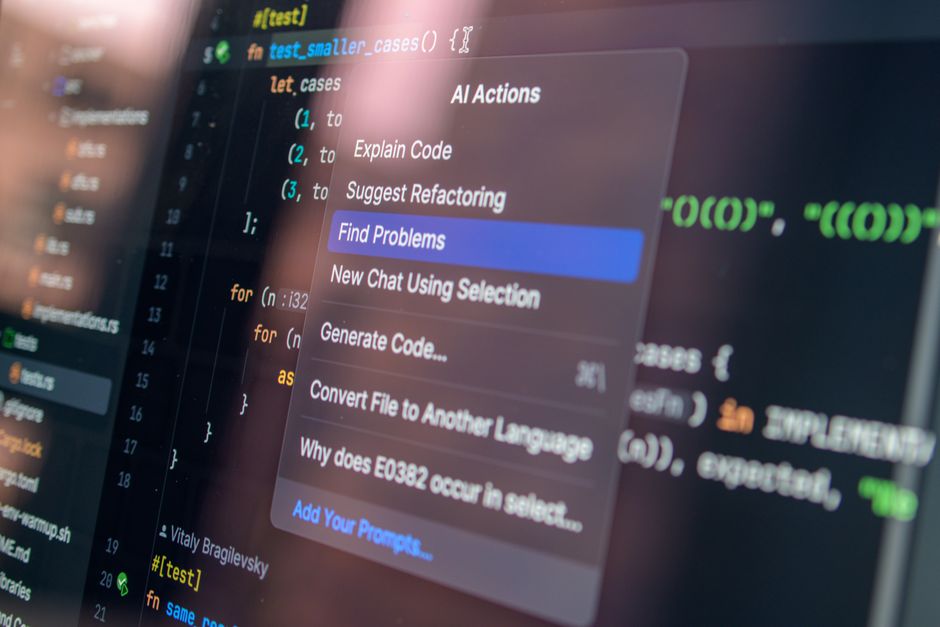
Claude Sonnet 5 was just released by Anthropic with an ambitious claim: this is the most agentic Sonnet model ever. It can make plans, use tools like browsers and terminals, and run autonomously at a level that only large, expensive models could handle a few months ago.
What’s interesting is that Sonnet 5’s performance is close to Opus 4.8 — Anthropic’s flagship model — but at a lower price. For developers who have been using Sonnet 3.5, 3.6, or 3.7 for coding and tool use, this is a significant upgrade.
What’s New in Sonnet 5?
From Anthropic’s announcement, there are several key improvements over its predecessor (Sonnet 4.6):
1. Much Better Agentic Performance
Sonnet 5 shows substantial improvement in four main areas:
- Reasoning — ability to break down complex problems into executable steps
- Tool Use — integration with browsers, terminals, and external APIs
- Coding — sustained coding for multi-step software engineering work
- Knowledge Work — handling messy technical contexts without losing track
What makes this different: Sonnet 5 can handle sustained coding and debugging in messy technical contexts. Previous models tended to lose track when tasks were multi-step and required lots of tool switching.
2. Cost-Performance Sweet Spot
From benchmarks Anthropic published, Sonnet 5 (orange line) is a strict improvement over Sonnet 4.6 (gray line). It covers a much wider cost-performance range compared to Opus 4.8 (yellow line).
At medium effort levels, Sonnet 5 gives substantially improved cost efficiency. At higher effort, its performance can match Opus 4.8 for some tasks. Between Sonnet 5 and Opus 4.8, users can adjust effort level to find the right balance between cost and performance.
3. Better Safety
Anthropic’s safety assessments found that Sonnet 5 has an overall lower rate of undesirable behaviors compared to Sonnet 4.6. It’s also generally safer to use in agentic contexts.
Evaluations show Sonnet 5 has a much lower ability to perform cybersecurity tasks compared to current Opus models. This is actually good news from a safety perspective — the model is powerful but not too dangerous in the wrong hands.
Availability and Pricing
Sonnet 5 is available across all plans:
- Free and Pro plans — becomes the default model
- Max, Team, and Enterprise — available as an option
- Claude Code — directly integrated
- Claude Platform — via API with model ID
claude-sonnet-5
Pricing (introductory until August 31, 2026):
- Input: $2 per million tokens
- Output: $10 per million tokens
After August 31, 2026:
- Input: $3 per million tokens
- Output: $15 per million tokens
Still much cheaper than the Opus tier, but with performance that comes close.
What This Means for Developers
If you’ve been:
- Using Sonnet 3.x/4.x for coding but often losing context on long tasks
- Needing a model that can handle multi-step debugging without constant hand-holding
- Wanting agentic capabilities but finding Opus too expensive for production use
Sonnet 5 might be the sweet spot you’re looking for. It provides a strong agentic execution layer for software engineering work — sustained coding, tool use, debugging — at a price that’s still reasonable for production deployment.
One note: Sonnet 5 is not a replacement for Opus in all use cases. For tasks that need the deepest reasoning or most sophisticated analysis, Opus is still king. But for 80% of everyday agentic coding and tool use cases, Sonnet 5 seems more than sufficient.
We’ll have to wait for independent benchmarks to confirm whether Anthropic’s claims hold up in real-world scenarios. But from early signals, Sonnet 5 looks promising.
For more context, check out Opus 4.8 Plans, Gemini 3.5 Executes and AI Wrote 80% in 10 Minutes.
Has anyone tried it? Share your experience in the comments.
Discover more from Susiloharjo
Subscribe to get the latest posts sent to your email.