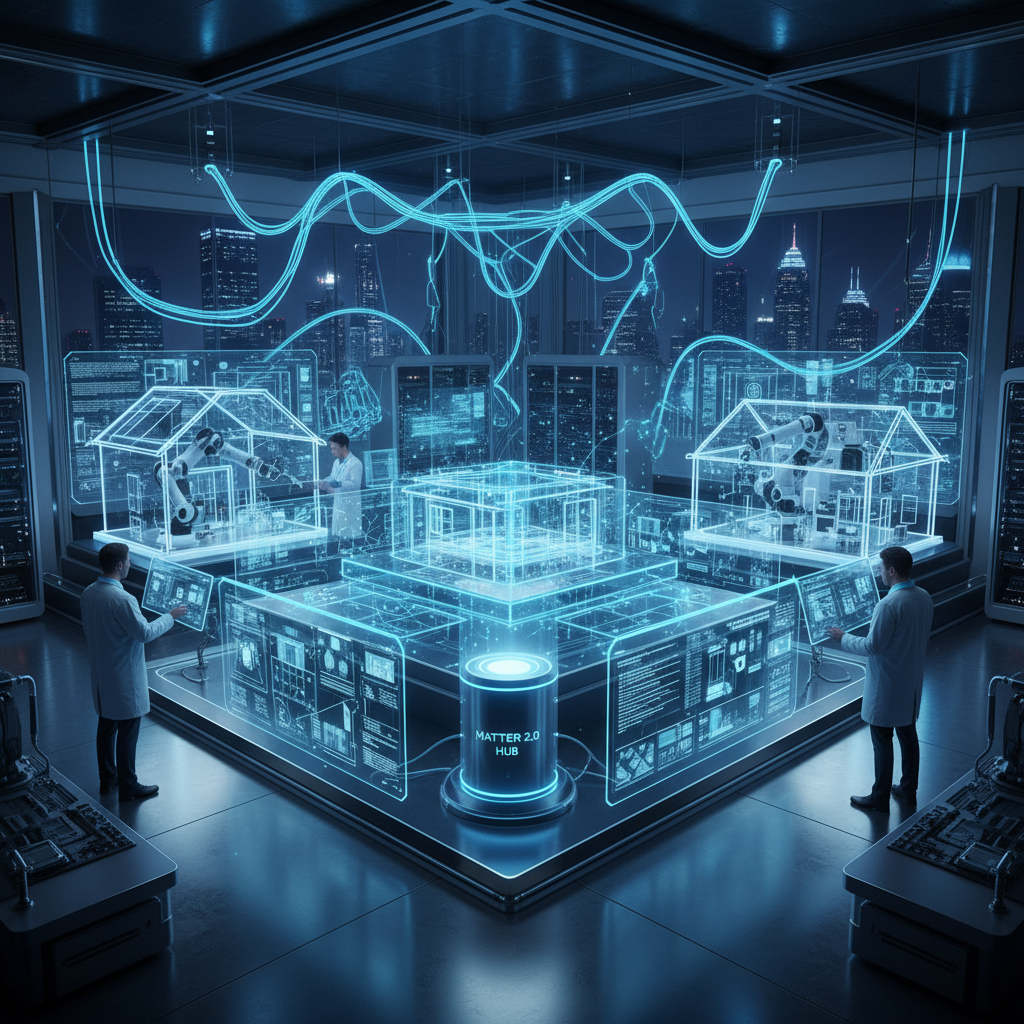
The Architectural Shift: Matter Protocol 2.0 Deep Dive Update 2026
The failure of early IoT ecosystems was not a lack of hardware innovation, but a fundamental collapse of interoperability caused by proprietary silos. For over a decade, the “Smart Home” was less of a cohesive system and more of a fragmented collection of radio-frequency islands—Zigbee, Z-Wave, and proprietary 433MHz protocols—each requiring a dedicated bridge, a specific cloud account, and a distinct mobile application. This technical friction reached its zenith in the early 2020s, leading to “hub fatigue” and a massive barrier to entry for consumers and professional installers alike. Matter Protocol 2.0, reaching maturity in 2026, represents the industry’s most aggressive technical pivot toward a unified, IP-based infrastructure that finally dissolves these silos.
The Evolution of Infrastructure: Matter Protocol 2.0 and Thread 1.4
As we navigate the 2026 landscape, the technical foundation of the smart home has moved beyond simple “on/off” commands. Matter Protocol 2.0 introduces a robust framework that leverages Thread 1.4 and Wi-Fi 6E to provide high-bandwidth, low-latency, and ultra-reliable connectivity. Unlike its predecessors, Matter 2.0 is built natively on IPv6, allowing every device to have a unique addressable identity without the need for translating “hubs.”
Thread 1.4 is the quiet workhorse of the 2026 smart home. By standardizing how Border Routers communicate over a home’s existing Wi-Fi or Ethernet infrastructure, Thread 1.4 ensures that a single mesh network covers the entire property, regardless of which manufacturer’s hub is used. This “Thread-over-Infrastructure” capability is a game-changer for reliability, aligning with our latest Technical Infrastructure Standards for high-performance networks.
| Feature | Thread 1.3 (2022) | Thread 1.4 (2026 Update) |
|---|---|---|
| Border Router Interoperability | Limited; often ecosystem-specific. | Universal; standardized infrastructure sharing. |
| Internet Connectivity | Requires specific gateways. | Standardized path via NAT64/DNS64. |
| Commissioning | Manual code/QR entry primarily. | Standardized sharing of credentials across fabrics. |
| Diagnostics | Basic health checks. | Deep mesh topology and path analysis. |
Security: A Zero Trust Approach to the Edge
Security in the IoT space is no longer an afterthought. **Matter Protocol 2.0** mandates a **Zero Trust** architecture from the silicon up. Every Matter 2.0 device must pass a **Device Attestation check** before it is allowed to join the fabric. For more details on the cryptographic standards, see the official CSA Matter Specification.
In 2026, we’ve moved past the era of “default passwords.” Matter 2.0 utilizes **PASE (Password Authenticated Session Establishment)** for the initial commissioning and **CASE (Certificate Authenticated Session Establishment)** for all subsequent communications. This ensures that even if a device on your network is compromised, it cannot spoof another device or intercept traffic. This architecture is an extension of the principles discussed in our analysis of Zero Trust A2A security, providing a cryptographic layer of safety that protects the entire local fabric.
Experiential Deep Dive: My 2026 Lab Setup
To put Matter Protocol 2.0 to the test, I recently overhauled my second-floor lab. The goal was simple: Zero proprietary hubs. Every device had to be Matter over Thread or Matter over Wi-Fi, adhering to the latest security standards reported by The Verge and industry-leading protocols from TechCrunch analysts.
The onboarding experience was noticeably different from 2024. Thanks to **Thread 1.4’s Credential Sharing**, Proximity Onboarding detected three new Eve sensors and a Bosch thermostat. In the background, border routers negotiated **IPv6 Prefix Delegation**, assigning each sensor a unique, routeable address. There were no “Device Offline” warnings, no “Bridge Not Responding” errors. The mesh was self-healing; when I intentionally unplugged the primary Thread border router, the secondary router took over the leader role in less than five seconds.
Conclusion
The success of Matter 2.0 proves that when giants cooperate, the consumer wins. Matter Protocol 2.0 has successfully decoupled hardware from software, giving control back to the user. We are finally living in the “Internet of Things” rather than the “Internet of Proprietary Silos.”
Are you ready to stop “managing” your smart home and start living in it?
Discover more from Susiloharjo
Subscribe to get the latest posts sent to your email.