The 2026 On-Device AI Pivot: Why Local Compute is the Final Identity Firewall
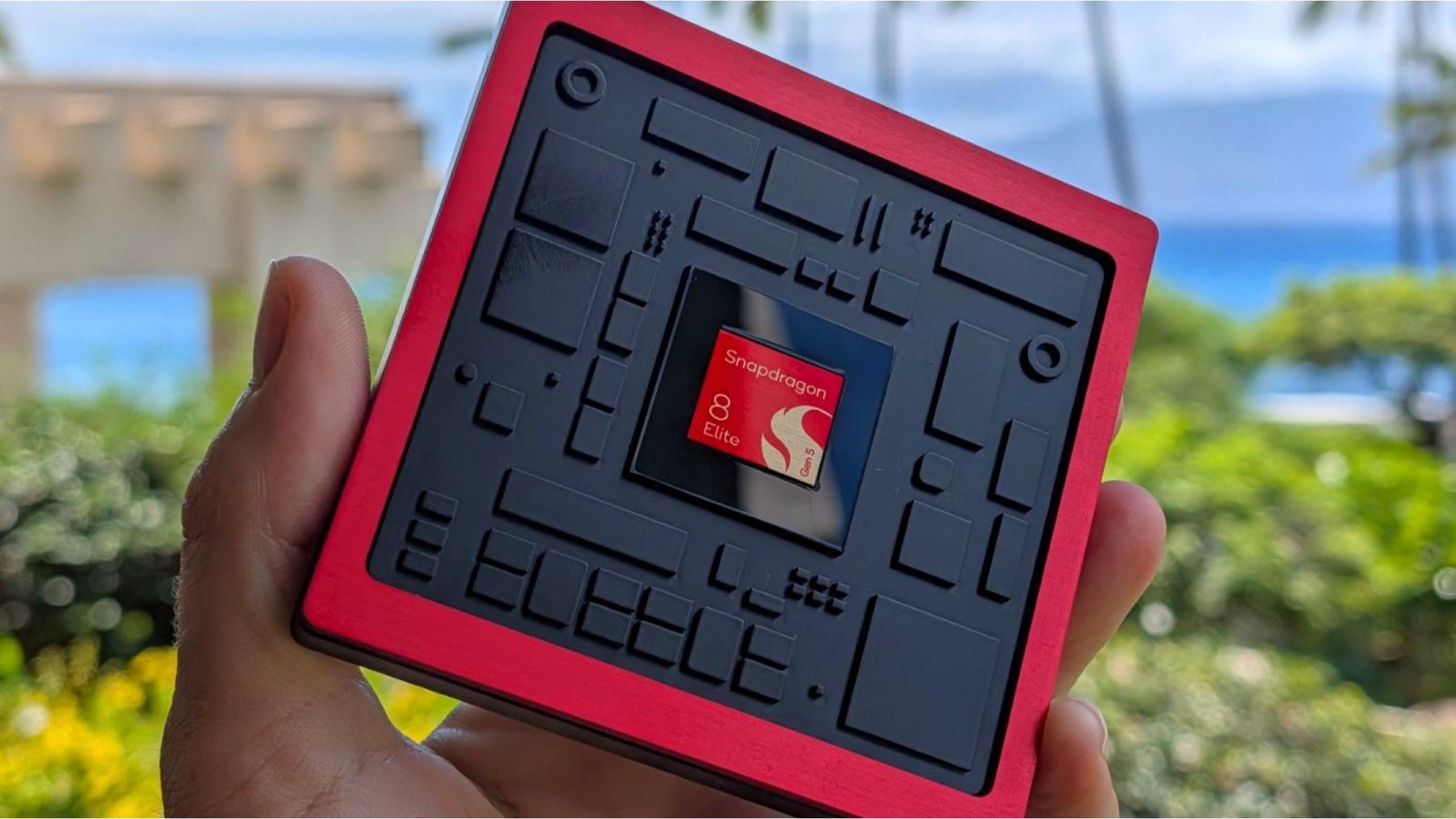
Entering February 2026, the global hardware landscape has arrived at a significant architectural crossroads. For the past decade, Artificial Intelligence has been synonymous with “The Cloud”—a centralized, resource-heavy infrastructure that treated individual devices as mere terminals. However, the mass deployment of the Snapdragon 8 Elite Gen 5 and the anticipated Apple A19 has effectively inverted this paradigm.
The “On-Device AI Pivot” of 2026 is not merely a performance milestone; it is a tactical retreat from the cloud as a response to the systemic privacy failures of 2024 and 2025. Today, local compute is being positioned not just as a feature, but as the final identity firewall.
The Architectural Shift: Hexagon NPU and 3nm Dominance
The technical catalyst for this shift is the evolution of the Neural Processing Unit (NPU). In the Snapdragon 8 Elite Gen 5, the integrated Hexagon NPU now offers a 37% increase in neural processing speed compared to its predecessor. This is achieved through a 3nm-GAA (Gate-All-Around) process that allows for higher transistor density and, crucially, significantly improved thermal efficiency.
More importantly, the architecture has transitioned from simple vector acceleration to Agentic AI support. These chips are now capable of running Large Language Models (LLMs) with up to 10 billion parameters directly in the device’s RAM. Traditionally, such models would have required a round-trip to an AWS or Google Cloud data center. By eliminating this hop, the device removes a massive man-in-the-middle (MITM) attack surface. This architectural shift is the high-tech equivalent of The COBOL Resurrection strategy, where modernization is used to eliminate reliance on external, fragile legacy dependencies.
Why Privacy is Moving to the Edge
The drive toward edge-first execution is fueled by three primary technical requirements:
1. Zero-Trust Identity Verification: Biometric data, financial metadata, and private communication patterns are no longer sent to external servers for “analysis.” Local NPUs now perform these validations within the device’s Secure Element (SE). In 2026, sending plain-text metadata to the cloud for “AI insight” is considered a legacy security failure, much like the The Agentic Failure Mode analyzed during the Meta data breach.
2. Differential Privacy at Runtime: The latest Galaxy AI 2.0 implementations use local compute to apply noise to data streams before telemetry is even generated. This ensures that any data leaving the device is mathematically impossible to link back to an individual identity.
3. Latency-Critical Security: Real-time fraud detection in mobile banking requires sub-millisecond response times. Cloud inference cannot match the latency of a chip-level NPU processing transaction patterns locally. This is a direct architectural response to the growing risks associated with Vibe Coding prototyping, where speed-over-safety led to massive open-source instability last year.
Snapdragon 8 Elite vs. Apple A19: The Local Compute War
The competition between Qualcomm and Apple in 2026 has shifted from CPU cycles to NPU sovereignty. While Qualcomm pushes Heterogeneous Computing via its Sensing Hub, Apple doubles down on its Private Cloud Compute (PCC) as a fallback, keeping physical knowledge graphs strictly local to the silicon.
For the enterprise, the evaluation is clear: Data that doesn’t leave the hand cannot be breached. The transition to on-device AI marks the end of the “Information Harvesting Era” and the beginning of the “Private Intelligence Era.”
Strategic Technical Analysis
Discover more from Susiloharjo
Subscribe to get the latest posts sent to your email.