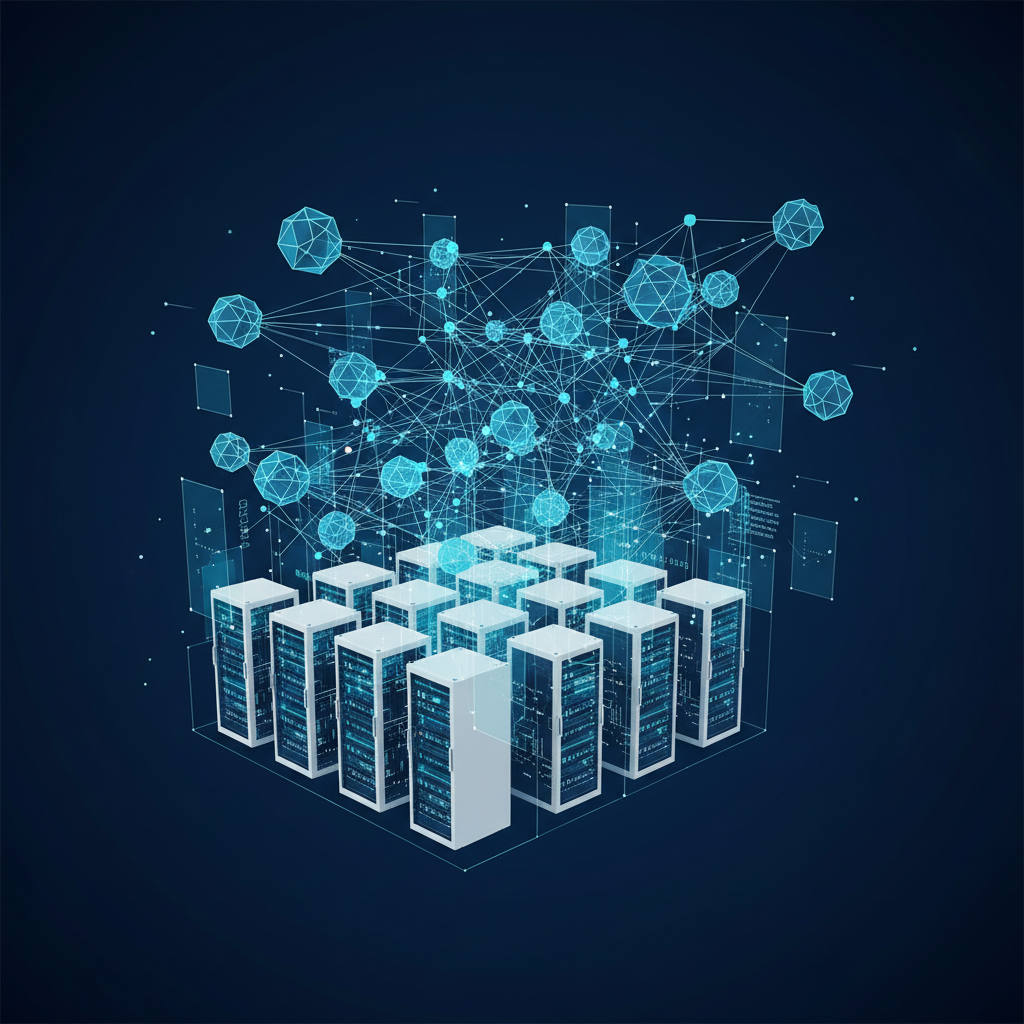
Pentagon AI Deals: Nvidia, Microsoft, AWS on Classified Nets
- IL6/IL7 Authorization: Pentagon clears Nvidia, Microsoft, AWS to deploy AI on classified networks handling secret and top-secret data.
- Security Architecture: Trusted execution environments (TEEs), Nitro Enclaves, and confidential computing protect model weights and inference data.
- Operational Scale: GenAI.mil platform serves 1.3M+ personnel with millions of monthly prompts across classification levels.
- Technical Challenges: Edge optimization, adversarial AI threats, and air-gapped model distribution require specialized infrastructure.
- Strategic Impact: Multi-vendor approach prevents single points of failure while accelerating AI-first military doctrine.
Pentagon AI deployment reached a critical milestone in May 2026 as the Department of Defense finalized agreements with Nvidia, Microsoft, and Amazon Web Services to operate artificial intelligence capabilities on classified networks. These Impact Level 6 (IL6) and Impact Level 7 (IL7) authorizations represent a fundamental shift in how military AI systems process sensitive operational data.
The agreements permit lawful operational use of commercial AI technologies within secure environments handling secret and top-secret information. This infrastructure overhaul positions the U.S. military as an AI-first fighting force, enabling real-time decision augmentation across warfighting domains.
Technical Architecture of Classified AI Deployment
The Pentagon’s AI Acceleration Strategy hinges on deploying commercial AI models within air-gapped classified enclaves. Nvidia’s contribution centers on its Nemotron large language model family, optimized for agent-based task completion in resource-constrained tactical environments. These models employ quantization techniques to reduce memory footprint while maintaining inference accuracy on edge hardware.
Microsoft’s Azure Government Secret Cloud provides the underlying compute fabric, leveraging confidential computing enclaves to protect model weights and inference data. The architecture employs hardware-based trusted execution environments (TEEs) using AMD SEV-SNP or Intel TDX to isolate AI workloads from hypervisor-level threats.
AWS contributes its GovCloud infrastructure with specialized networking for low-latency AI inference. The deployment utilizes Nitro Enclaves for isolated processing of classified prompts and responses, ensuring that sensitive operational data never exposes plaintext outside secure memory regions.
Pentagon AI Security Considerations for IL6/IL7 Systems
Operating AI on classified networks introduces unique attack vectors beyond conventional cloud security. Model inversion attacks could potentially reconstruct training data from inference outputs, risking exposure of classified sources and methods. The Pentagon’s security framework mandates differential privacy techniques and output filtering to mitigate this risk.
Supply chain integrity remains paramount. Each AI model undergoes rigorous validation against tampering, with cryptographic signing of model weights and container images. The deployment pipeline employs zero-trust principles, requiring mutual TLS authentication and continuous verification of runtime integrity.
Data exfiltration prevention relies on strict egress controls and content inspection at security boundaries. AI-generated outputs pass through classified release authorities before crossing domain boundaries, preventing accidental disclosure of sensitive information through model hallucinations or prompt injection attacks.
Comparison of Defense AI Provider Capabilities
| Provider | Core Technology | Security Architecture | Classification Level | Primary Use Case |
|---|---|---|---|---|
| Nvidia | Nemotron LLM, AI Agents | GPU-accelerated TEEs | IL6/IL7 | Tactical decision support |
| Microsoft | Azure OpenAI, Copilot | Confidential Computing (SEV-SNP) | IL6 | Enterprise productivity |
| AWS | Bedrock, SageMaker | Nitro Enclaves | IL6/IL7 | Intelligence analysis |
| Gemini, Vertex AI | Confidential VMs | IL6 | Geospatial analysis |
Implementation Challenges and Technical Debt
Deploying commercial AI in classified environments faces significant integration hurdles. Legacy military systems operate on outdated operating systems and network protocols incompatible with modern AI infrastructure. The Pentagon must invest in middleware layers to bridge these gaps without compromising security posture.
Model maintenance presents ongoing challenges. Classified networks cannot access public model updates, requiring secure transfer mechanisms for weight updates and security patches. This isolation creates version drift between classified and unclassified AI deployments, potentially introducing inconsistencies in operational outputs.
Latency constraints in tactical environments demand edge-optimized models. Large language models with billions of parameters require substantial compute resources unavailable in forward-deployed settings. Quantization and distillation techniques reduce model size but may degrade performance on specialized military tasks.
Network Infrastructure and Bandwidth Constraints
Classified network topology introduces unique bandwidth limitations. Tactical Edge networks operate at speeds far below commercial broadband, often constrained to satellite links with high latency and intermittent connectivity. AI model deployment must account for these constraints through strategic caching and offline inference capabilities.
Content Delivery Networks (CDNs) cannot operate in classified environments, requiring local distribution of model artifacts. The Pentagon employs secure physical media transfer for large model weights, with cryptographic verification at each distribution point. This air-gapped distribution model adds operational overhead but prevents remote compromise of AI supply chains.
Network segmentation within classified enclaves further complicates AI deployment. Different classification compartments (SCI, SAP) require isolated AI instances, multiplying infrastructure requirements. Cross-domain solutions enable limited data sharing but introduce latency bottlenecks that impact real-time AI applications.
Adversarial AI Threat Models
Military AI systems face sophisticated adversarial threats beyond conventional cybersecurity. Prompt injection attacks could manipulate AI outputs to provide misleading tactical recommendations. The Pentagon’s defense-in-depth strategy employs input sanitization, output validation, and human-in-the-loop verification for critical decisions.
Data poisoning represents a long-term threat to model integrity. Adversaries with access to training data sources could introduce subtle biases that manifest during operational use. Continuous model monitoring and anomaly detection systems track inference patterns for signs of compromise, triggering manual review when deviations exceed thresholds.
Model extraction attacks pose intellectual property and security risks. Adversaries could query AI systems to reconstruct model architecture or infer training data characteristics. Rate limiting, query auditing, and output perturbation techniques mitigate this threat while preserving operational utility.
GenAI.mil Platform Integration
The Pentagon’s GenAI.mil platform serves as the unified interface for AI capabilities across classification levels. With over 1.3 million personnel generating millions of prompts monthly, the platform demonstrates operational viability. The new classified network agreements extend GenAI.mil functionality to secret and top-secret domains.
Integration requires careful orchestration of cross-domain solutions (CDS) to enable controlled information flow between classification levels. AI agents operating in classified environments can summarize sensitive data for unclassified dissemination, accelerating intelligence workflows while maintaining security boundaries.
Strategic Implications for Defense AI
These agreements signal a maturation of defense AI from experimental pilots to operational infrastructure. By leveraging commercial innovation within secure perimeters, the Pentagon accelerates AI adoption without sacrificing security requirements. The multi-vendor approach prevents single points of failure and encourages competitive capability development.
International allies observe these deployments closely, with implications for interoperability and technology sharing. NATO standardization efforts for military AI may draw from Pentagon implementation patterns, shaping allied defense AI architectures for the next decade.
The defense industrial face transforms as software companies become strategic partners alongside traditional contractors. This shift demands new acquisition frameworks and security clearance processes adapted to commercial development cycles and open-source dependencies.
Conclusion: Operational Reality Check
Pentagon AI deployment on classified networks represents more than technological advancement—it embodies a doctrinal shift toward AI-augmented warfare. Success depends not on model sophistication alone, but on robust security architectures, reliable infrastructure, and operator trust in AI-generated recommendations.
Technical challenges remain substantial: model validation in isolated environments, latency optimization for edge deployment, and prevention of adversarial manipulation. The coming 18 months will reveal whether these agreements translate into measurable operational advantages or remain constrained by integration complexity.
For deeper analysis of military AI infrastructure challenges, see our examination of AI Military Infrastructure Challenges and the broader implications for defense technology adoption.
Additional technical resources on secure AI deployment:
- NIST AI Risk Management Framework: NIST AI RMF
- MITRE ATLAS (Adversarial Threat Landscape for AI Systems): MITRE ATLAS
External references for technical validation:
Related: Pentagon Signs AI Deals With Nvidia, Microsoft, AWS.
Related: Building with Nvidia: $40B AI Equity Deals Reshape Market.
- U.S. Department of Defense AI Acceleration Strategy: Official DoD AI Strategy
- Nvidia Nemotron Technical Documentation: Nvidia Nemotron Docs
- Microsoft Azure Confidential Computing: Azure Confidential Computing
Discover more from Susiloharjo
Subscribe to get the latest posts sent to your email.