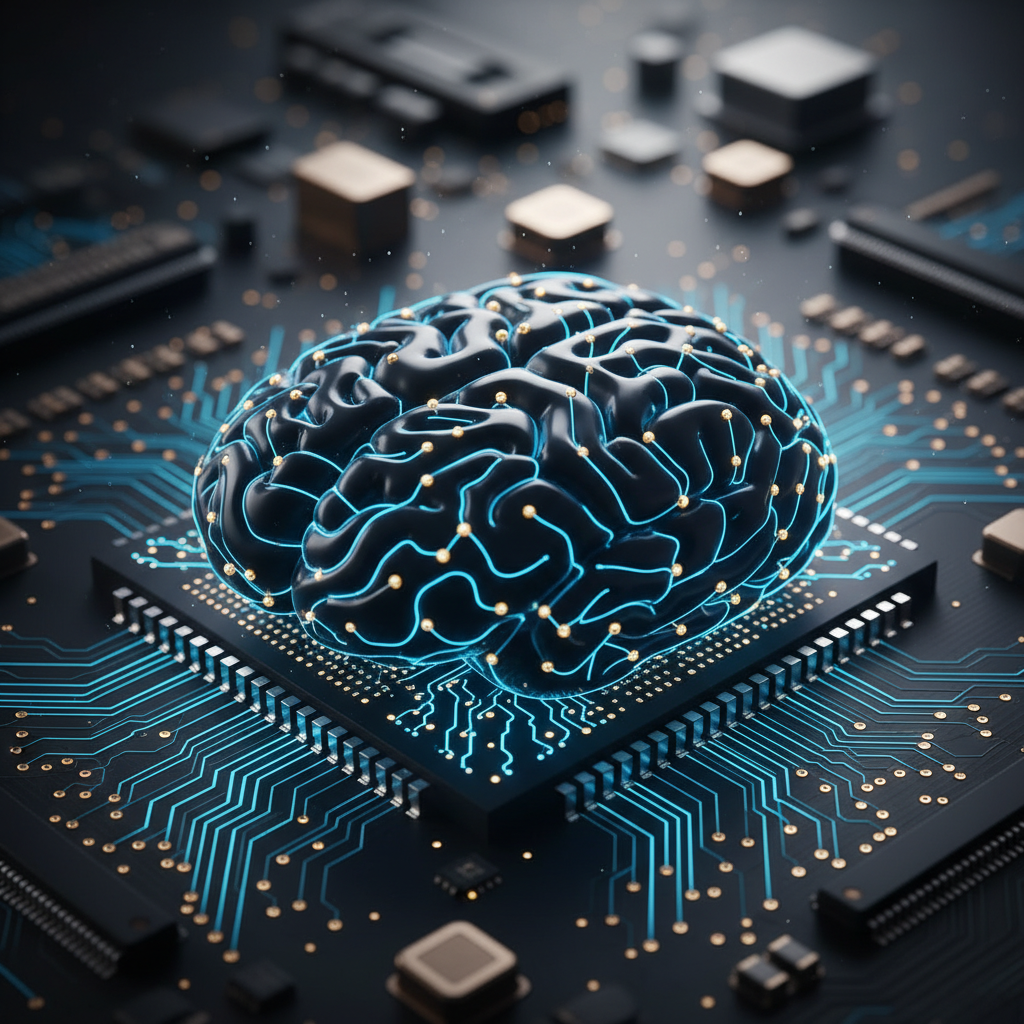
Common computing architectures based on the Von Neumann model are facing a catastrophic energy penalty. In the relentless pursuit of AI scaling, the physical separation of processing units and memory has become the primary bottleneck of modern inference. As we navigate the performance plateaus of 2026, Neuromorphic Silicon has emerged as the definitive solution to the “memory wall,” fundamentally mimicking the biological efficiency of the human brain to process high-entropy data at the edge without the overhead of traditional silicon.
The Physics of Efficiency: Beyond Von Neumann Bottlenecks
The core limitation of traditional GPU and TPU architectures lies in the energy cost of data movement. In standard architectures, moving data from RAM to the processor consumes significantly more power than the actual computation. Neuromorphic chips, such as the Intel Loihi 2 and BrainChip Akida Pulsar, utilize a co-located compute-and-memory paradigm. By integrating memory directly within the “synaptic” processing nodes, these chips eliminate the Von Neumann bottleneck, enabling real-time learning and inference at milliwatt power scales.
The technical shift is driven by Spiking Neural Networks (SNNs). Unlike standard deep learning models that process continuous mathematical values, SNNs communicate via discrete “spikes,” similar to biological neurons. This asynchronous processing ensures that power is consumed only when a spike occurs, leading to energy savings of 100x to 500x compared to conventional x86 or ARM-based AI accelerators. The following technical comparison highlights the architecture divergence in 2026 deployments:
| Architecture Metric | Standard GPU/TPU (Von Neumann) | Neuromorphic Silicon (Biological Style) |
|---|---|---|
| Data Processing | Clock-driven / Synchronous | Event-driven / Asynchronous (SNN) |
| Memory Location | External (HBM/VRAM) | Co-located (Intra-neuronal memory) |
| Power Consumption | High (150W – 400W+) | Ultra-low (Milliwatts to <5W) |
| Inference Latency | Batch-dependent | Instantaneous (Real-time spikes) |
Commercial Scale: Loihi 2 and the Industrial Edge
In March 2026, neuromorphic hardware has moved from laboratory experiments to industrial-grade deployment in autonomous robotics and sensor-edge AI. Intel’s Loihi 2, featuring 128 cores and up to 1 million neurons, is currently being integrated into sub-meter autonomous drones and portable medical diagnostic devices where battery density constraints previously hindered AI integration. The ability to process complex visual and auditory data locally—without the need for high-bandwidth cloud offloading—provides a critical advantage in terms of both privacy and operational reliability.
Furthermore, the BrainChip Akida architecture has found its niche in Sensor-Edge intelligence. By processing only “pixel changes” rather than entire video frames, neuromorphic image sensors are extending the lifespan of IoT deployments from months to years. This “Always-on, Always-learning” capability allows industrial systems to detect network anomalies or mechanical vibrations in real-time, adapting to new data patterns without requiring a complete model re-training in a centralized data center.
Architectural Sovereignty and the New Silicon Frontier
The rise of neuromorphic silicon represents a profound shift in geopolitical tech sovereignty. As traditional silicon manufacturing approaches the physical limits of 2nm nodes, the focus of innovation has shifted toward architectural novelty. Countries and organizations that invest in neuromorphic IP are effectively bypassing the brute-force scaling wars led by legacy NVIDIA/AMD architectures. This “third stream” of computing ensures that high-performance AI is no longer the exclusive domain of massive power grids and hyperscale data centers.
The technical implication for system architects is significant. We are entering an era where hardware choice is dictated by the energy entropy of the task. For massive foundation model training, the GPU remains king. But for the Agentic Edge—the trillions of devices that will soon populate our physical environments—neuromorphic silicon is the only viable path forward. The question for 2026 is no longer how many transistors we can fit on a die, but how efficiently we can manage the flow of information without burning through our energy reserves.
Analysis: The Future of Energy-Aware Computing
The energy crisis of large-scale AI is forcing a return to biological principles. Neuromorphic silicon proves that the most efficient way to model intelligence is to mimic the machine that evolved to do it best. As developers and architects, the transition necessitates a fundamental re-learning of computing logic—moving away from synchronous state machines toward the fluid, event-driven reality of spikes. The Von Neumann era is not ending, but its monopoly on high-performance computing has officially been broken.
Related: Beyond GPUs: The Rise of Neuromorphic Silicon in 2026.
Related: Simon Sinek: Beyond Start With Why — What Most Bios Miss.
Discover more from Susiloharjo
Subscribe to get the latest posts sent to your email.