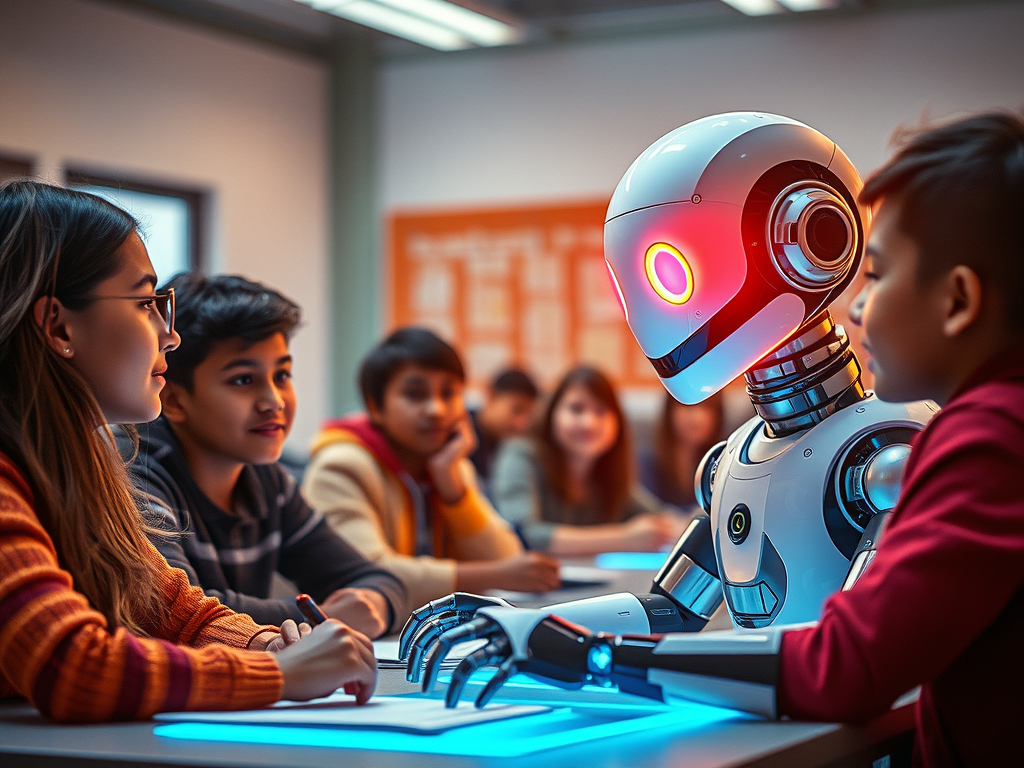
Artificial Intelligence has the potential to revolutionize education — but only if it’s designed with the right principles in mind. An effective AI learning companion isn’t just a “question-answer machine.” It should guide, challenge, and inspire learners while also supporting educators. Here’s what it takes to make that happen.
1. Personalized Tutoring and Guidance
The most powerful AI in education acts like a personal tutor, not a shortcut to the answer. Instead of simply providing solutions, it should help students discover them through:
- Socratic questioning — prompting learners to think critically and explain their reasoning, so they can identify and correct misunderstandings on their own.
- Context awareness — understanding the specific subject or topic, whether it’s a math problem, a programming challenge, or a piece of literature.
- Holistic support — offering guidance not only in academics but also in areas like career planning, study skills, and personal growth.
By doing this, the AI fosters deep understanding rather than passive learning.
2. Interactive and Immersive Learning Experiences
An AI learning companion can transform lessons into interactive journeys:
- Role-based learning — allowing students to “converse” with historical figures, scientists, or fictional characters to gain richer insights.
- Safe debate practice — enabling learners to test arguments and refine their reasoning without fear of judgment.
These experiences turn learning into something memorable and engaging, helping knowledge stick.
3. Building Literacy and Communication Skills
An AI tutor should collaborate with students, not replace them:
- Co-writing — working alongside students to craft essays or stories, sentence by sentence, to strengthen writing skills.
- Reading comprehension coaching — asking probing questions about author intent, word choice, and meaning, encouraging deeper analysis.
- Constructive feedback — reviewing drafts, pointing out weak arguments, and encouraging evidence-based reasoning.
This approach turns the AI into a coach that improves critical thinking, not a crutch that undermines it.
4. Support for Educators
Teachers benefit greatly from an AI partner that acts as a smart teaching assistant:
- Creating lesson plans and learning materials
- Suggesting differentiated teaching strategies
- Helping with grading and progress tracking
- Providing real-time explanations and examples
By automating repetitive tasks, educators can focus more on personal, human-to-human interactions.
5. Smart AI Design and Safeguards
Designing a truly effective AI tutor is more complex than just plugging a large language model into a chatbot interface. It requires:
- Thoughtful response planning — where the AI “thinks before it speaks,” deciding whether to guide or challenge rather than simply correct.
- Built-in safeguards — such as conversation logs for teacher review and AI moderation layers to ensure accuracy and appropriateness.
- Learning-first philosophy — deliberately avoiding giving direct answers, instead steering students toward independent problem-solving.
Final Thoughts
When designed with these principles, AI can become more than a tool — it can be a trusted learning companion. By guiding rather than telling, engaging rather than lecturing, and supporting both students and teachers, AI has the power to make education more personalized, interactive, and effective than ever before.
Related: Tips to build your 1st Machine Learning Model.
Related: Design Thinking Is 80% Theater. Here’s the 20% That Works..
Discover more from Susiloharjo
Subscribe to get the latest posts sent to your email.