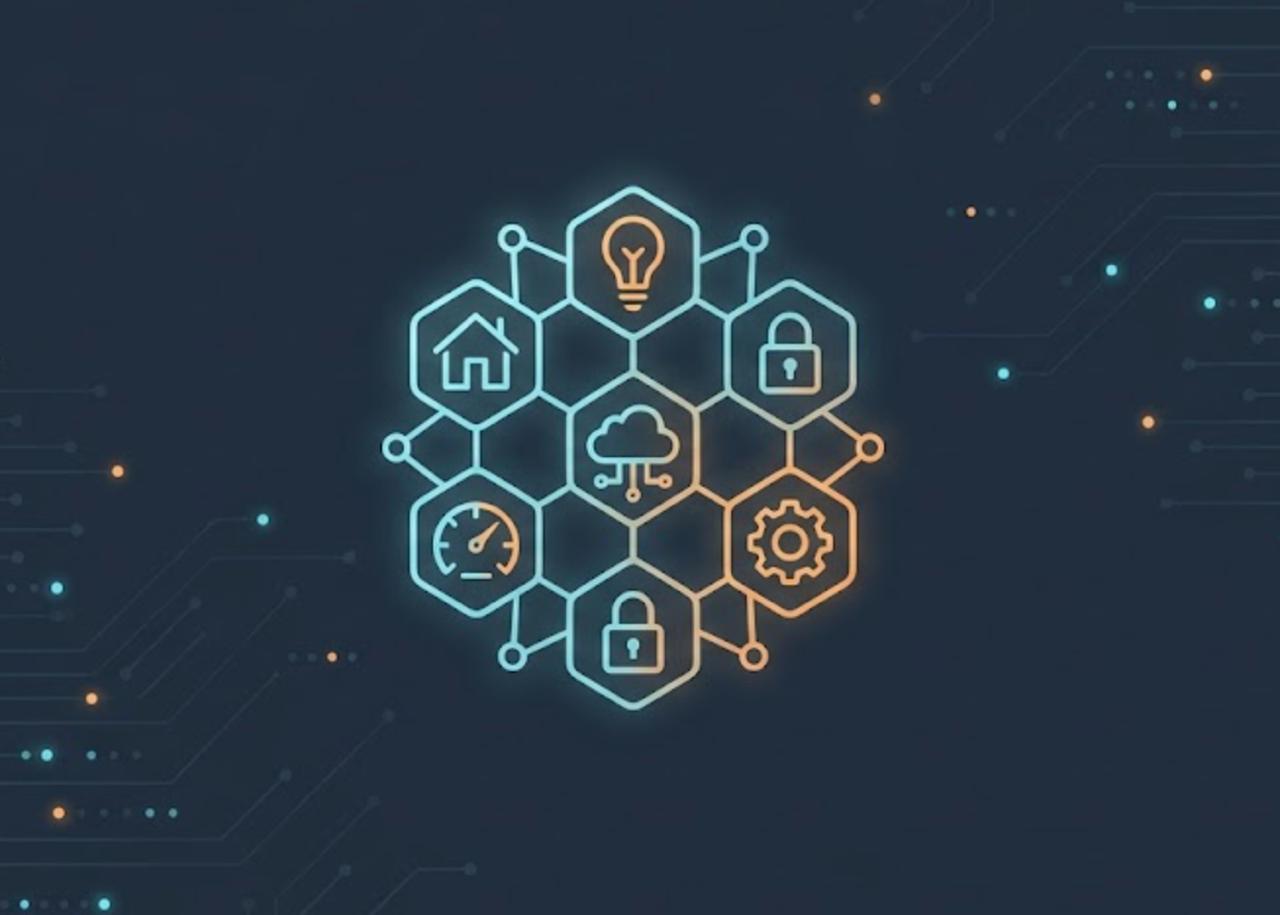
- Data governance across heterogeneous DER assets is the foundational prerequisite — without unified telemetry semantics across Modbus, DNP3, IEC 61850, and MQTT, edge inference produces garbage regardless of model quality.
- Model lifecycle management at fleet scale requires automated drift detection and retraining pipelines; battery chemistry degradation guarantees that a model trained on month-zero data will mispredict by month twelve.
- Security at every layer is not optional — DER assets are grid-connected critical infrastructure, mandating firmware attestation, secure boot, encrypted telemetry, and OTA integrity verification as non-negotiable baseline requirements.
– The hard problem is not model accuracy — it is systems integration across a fragmented protocol landscape where a false-positive thermal runaway inference can trigger an unnecessary shutdown costing between $50,000 and $500,000 per event.
The Protocol Fragmentation Barrier
Distributed Energy Resources present a data integration problem of uncommon severity. A single utility-scale battery enclosure — roughly the footprint of a shipping container — houses thousands of individual cells, each instrumented with voltage, temperature, and impedance sensors generating telemetry at sub-second granularity. The raw data volume from one enclosure clocks between one and ten megabytes per day. Across a fleet of one hundred units, that becomes a gigabyte of daily telemetry requiring ingestion, normalization, and inference at the edge.
The challenge compounds sharply when assets originate from different manufacturers. A solar inverter from one vendor speaks Modbus RTU over RS-485; a battery management system from another uses DNP3 over TCP/IP; a wind turbine controller may implement IEC 61850 with MMS messaging; newer deployments increasingly default to MQTT with Sparkplug B payloads. Each protocol carries its own addressing scheme, data model, and timing semantics. A Modbus register holding state-of-charge as a 16-bit unsigned integer scaled by 0.01 bears no structural resemblance to an MQTT topic publishing the same value as a JSON float with millisecond epoch timestamps.
The engineering consequence is that uniform edge inference across a heterogeneous fleet cannot begin until a canonical data model exists. This is not a machine learning problem — it is a data engineering and governance problem. The canonical model must normalize register addresses, unit conversions, timestamp formats, and quality flags into a single schema consumable by inference runtimes such as ONNX Runtime or TensorFlow Lite. Without this normalization layer, the same model deployed across two different BMS implementations will receive structurally incompatible feature vectors. The inference output may look plausible — floating-point numbers always do — but its semantic validity collapses.
Protocol gateways and industrial IoT platforms attempt to paper over this fragmentation. AWS IoT Greengrass provides protocol adapter components; Azure IoT Edge offers OPC UA and Modbus modules; custom Linux edge gateways running Node-RED or Ignition Edge perform manual mapping. Each approach works, but each introduces its own latency tax and failure surface. The architect evaluating these options should treat protocol normalization as a first-class infrastructure concern, not a configuration checkbox to be discovered during commissioning.
Model Lifecycle: Training, Drift, and the Retraining Gap
Edge AI for DER fleets operates under inference latency constraints that bifurcate the model landscape. Thermal runaway detection demands sub-100-millisecond response — the difference between a controlled shutdown and a cascading thermal event. Degradation forecasting and state-of-health estimation, by contrast, tolerate latencies measured in minutes. These divergent requirements mean a single-model strategy is architecturally insufficient; the edge node must orchestrate multiple inference pipelines with different SLA profiles.
The deeper challenge is model drift. Lithium-ion cells degrade across charge-discharge cycles. Internal resistance increases; capacity fades; the voltage curve under load shifts subtly but inexorably. The data distribution a state-of-charge model was trained on at commissioning diverges from production reality within months. A model that once predicted state-of-charge within one percent error begins drifting toward three, then five, then eight percent — and the degradation is silent. There is no compile-time error for distributional shift.
The operational pattern that emerges is: train on aggregated cloud data, quantize and deploy to edge gateways, monitor prediction residuals against ground-truth measurements, trigger retraining when drift exceeds a threshold, and push updated model artifacts via secure OTA channels. This pipeline must run continuously across a fleet that may span hundreds of geographically dispersed sites. Continuous retraining is not an optimization; it is an operational requirement.
Security at the Grid Edge
DER assets connected to transmission or distribution networks fall under NERC CIP regulatory standards in North America and equivalent frameworks elsewhere. The implication is unambiguous: these are critical infrastructure assets, and their compromise carries consequences beyond data loss. An adversary with write access to a BMS controller can disable thermal protection logic, manipulate state-of-charge reporting to grid operators, or coordinate simultaneous disconnection across a fleet to destabilize frequency regulation.
The security posture must span the full stack. At the silicon level, secure boot with hardware root of trust ensures only signed firmware executes on the edge gateway. Firmware attestation — typically via TPM 2.0 or Platform Secure Boot on ARM TrustZone — provides cryptographic proof that the running image matches the authorized build. At the transport layer, all telemetry streams must be encrypted. MQTT with TLS 1.3 and client certificate authentication is the emerging baseline; unencrypted Modbus RTU on serial links represents an increasingly unacceptable risk surface.
Over-the-air update integrity is the third pillar. Pushing a corrupted or malicious model artifact to a hundred edge nodes simultaneously would constitute a fleet-wide incident. Signed OTA payloads with hash verification before installation — and automated rollback on inference anomaly detection — close this vector. The architecture should treat the OTA pipeline with the same rigor as the inference pipeline: versioned artifacts, cryptographically verified delivery, and audit-logged installation events.
The Hardware Trade-off: MCU versus Gateway Inference
A persistent architectural question in edge AI for DER is where inference executes. Microcontroller-class hardware — ESP32, STM32H7, ARM Cortex-M7 — can run TensorFlow Lite Micro models in the tens to hundreds of kilobytes, sufficient for simple anomaly detection on individual sensor streams. The power envelope is negligible, and the bill of materials cost is measured in single-digit dollars.
The limitation is model capacity. A quantized int8 model fitting within 512KB of flash cannot capture multivariate interactions between cell voltage, temperature, current, and state-of-charge that characterize battery behavior. For thermal runaway prediction — where precursor signatures involve correlated patterns across dozens of sensor channels — the model complexity exceeds what an MCU can host.
The alternative is edge gateway inference on x86 industrial PCs or NVIDIA Jetson modules, where model sizes in the tens to hundreds of megabytes are feasible. These platforms run full ONNX Runtime or TensorFlow Serving, support GPU-accelerated inference, and can host multiple models simultaneously. The trade-off is cost, power consumption, and thermal management in enclosure environments operating at elevated ambient temperatures.
The architecturally sound answer is tiered inference: lightweight MCU models at the cell-module level for immediate threshold alerts, and heavyweight gateway models for fleet-level prediction and optimization. The two tiers communicate over internal CAN bus or Modbus TCP, with the gateway aggregating MCU outputs as features alongside raw telemetry for its own inference pass. This pattern mirrors sensor-fusion architectures in automotive ADAS systems and adapts cleanly to the DER domain.
Conclusion / Engineering Takeaways
Edge AI for distributed energy resources is a systems integration discipline. The model accuracy metrics that dominate conference papers and vendor benchmarks are secondary to three architectural preconditions: data governance delivering a canonical telemetry model across protocol heterogeneity, model lifecycle management treating continuous retraining as a core operational function, and security architected at every layer from silicon to OTA transport.
The organizations shipping AI-enabled DER platforms today — Fluence, Tesla, Wärtsilä, Stem — are not competing on model architecture. They are competing on the quality of their integration, governance, and security engineering. That is where the real technical differentiation lives.
🔗 Related Articles
- Lighthouse Attention: The Training-Time Hierarchy That Makes Quadratic Attention Practical Again
- When AI Diagnoses the Plant Before Anyone Notices: How Endress+Hauser Eliminated 80% of Measurement Fault Support Calls
- The CVE That Wasn’t: Microsoft’s Azure Vulnerability Rejection and the Eroding Trust in Cloud Disclosure
Discover more from Susiloharjo
Subscribe to get the latest posts sent to your email.