Introduction
Looking for a clear, actionable plan to roll out Cloudflare? This guide breaks down the essential dimensions, priorities, and a phased roadmap that helps developers and engineers boost performance, harden security, and stay within budget.
Why a Structured Cloudflare Implementation Matters
Cloudflare offers a wide suite of products—CDN, WAF, Workers, R2, Zero Trust, and more. Without a roadmap, you risk over‑engineering, missing critical security controls, or paying for features you don’t need. A structured plan ensures you get the highest ROI early and scale smoothly.
Key Dimensions to Consider
| Dimension | What to Evaluate | Why It Matters |
|---|---|---|
| Application type | Public website, API backend, internal tool | Determines which Cloudflare layers (CDN, WAF, Zero Trust) are required. |
| Traffic profile | Global vs. regional audience, peak volume, static vs. dynamic ratio | Shapes edge caching, load‑balancing, and Argo Smart Routing. |
| Security posture | Compliance needs (PCI/DSS, GDPR, HIPAA), known attack surface, bot traffic | Guides WAF rules, Bot Management, TLS, and Zero‑Trust policies. |
| Performance goals | Page‑load targets, API latency SLAs, media delivery | Drives Workers edge logic, image optimization, and R2 usage. |
| Operational constraints | Existing hosting (VPS, Kubernetes, serverless), team expertise, budget | Helps decide which Cloudflare products to adopt first. |
| Future roadmap | Real‑time features, multi‑cloud strategy, private networking | Influences Spectrum, Zero Trust, and R2 integration plans. |
Step‑by‑Step Phased Rollout
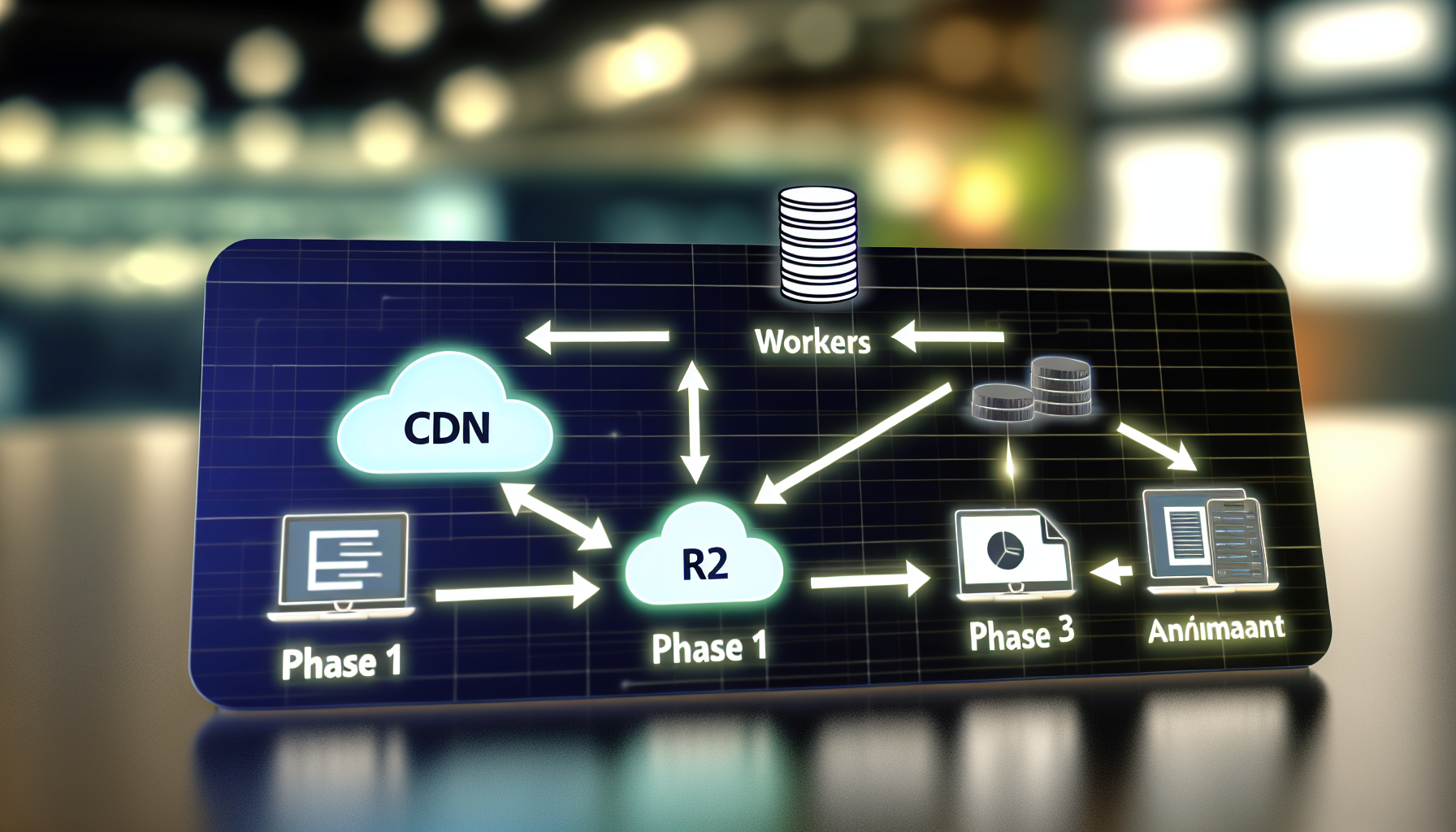
Use the dimensions above to prioritize features. A typical three‑phase approach looks like this:
- Phase 1 – Foundation: Point DNS to Cloudflare, enable TLS 1.3, activate the CDN, and turn on Argo Smart Routing.
- Phase 2 – Security & Optimization: Deploy Managed WAF rules, set up Rate Limiting, enable Bot Management, and configure image optimization (Polish/Mirage).
- Phase 3 – Edge Logic & Advanced Services: Add Cloudflare Workers for custom edge code, store static assets in R2, and apply Zero Trust Access for internal tools.
Quick Example Use Cases
| Use Case | Phase 1 | Phase 2 | Phase 3 |
|---|---|---|---|
| SaaS API | DNS + TLS 1.3, Argo Smart Routing | Managed WAF, Rate Limiting, Bot Management | Workers for JWT verification, R2 for OpenAPI specs, Zero Trust for admin API |
| E‑commerce storefront | CDN with aggressive caching, Polish/Mirage, HSTS | Custom WAF rules for checkout, Bot Management, Load Balancing | Workers for A/B testing, R2 for product media, Zero Trust for staff portal |
| Internal admin app | Cloudflare Tunnel (Argo Tunnel) + DNS | Zero Trust Access policies, Gateway for secure browsing | Workers for request validation, R2 for log archiving |
How to Get Started Today
1. List the rows from the table above that match your situation.
2. Add any extra constraints (budget, compliance, existing cloud provider).
3. Use the phased rollout to prioritize Cloudflare services.
For deeper guidance, check out the official Cloudflare documentation:
Conclusion
Mapping your application’s dimensions to a phased Cloudflare plan gives you faster load times, stronger security, and predictable costs. Start with DNS and CDN, then layer on WAF, Workers, and Zero Trust as your needs grow.
Meta Description: Learn how to build a Cloudflare implementation roadmap with key dimensions, phased rollout, and real‑world examples for websites, APIs, and internal tools.
Focus Keywords: Cloudflare implementation roadmap, Cloudflare phased rollout, Cloudflare performance and security, Cloudflare for developers
Related: Step-by-Step Guide: Setting Up Cloudflare Tunnel and Traefik with Docker for Wil.
Related: OpenAI Yubico Security: FIDO2 Architecture Guide 2026.
Discover more from Susiloharjo
Subscribe to get the latest posts sent to your email.