Beyond Context Windows: The Technical Reality of Adaptive Thinking in Claude Opus 4.6

Technical visualization of Adaptive Thinking AI architecture layers

Beyond Context Windows: The Technical Reality of Adaptive Thinking in Claude Opus 4.6 The artificial intelligence landscape has undergone a fundamental shift in how large language models process and utilize information. Claude Opus 4.6 introduces what Anthropic describes as Adaptive Thinking AI Architecture — a paradigm that transcends the traditional boundaries of fixed context windows … Read more
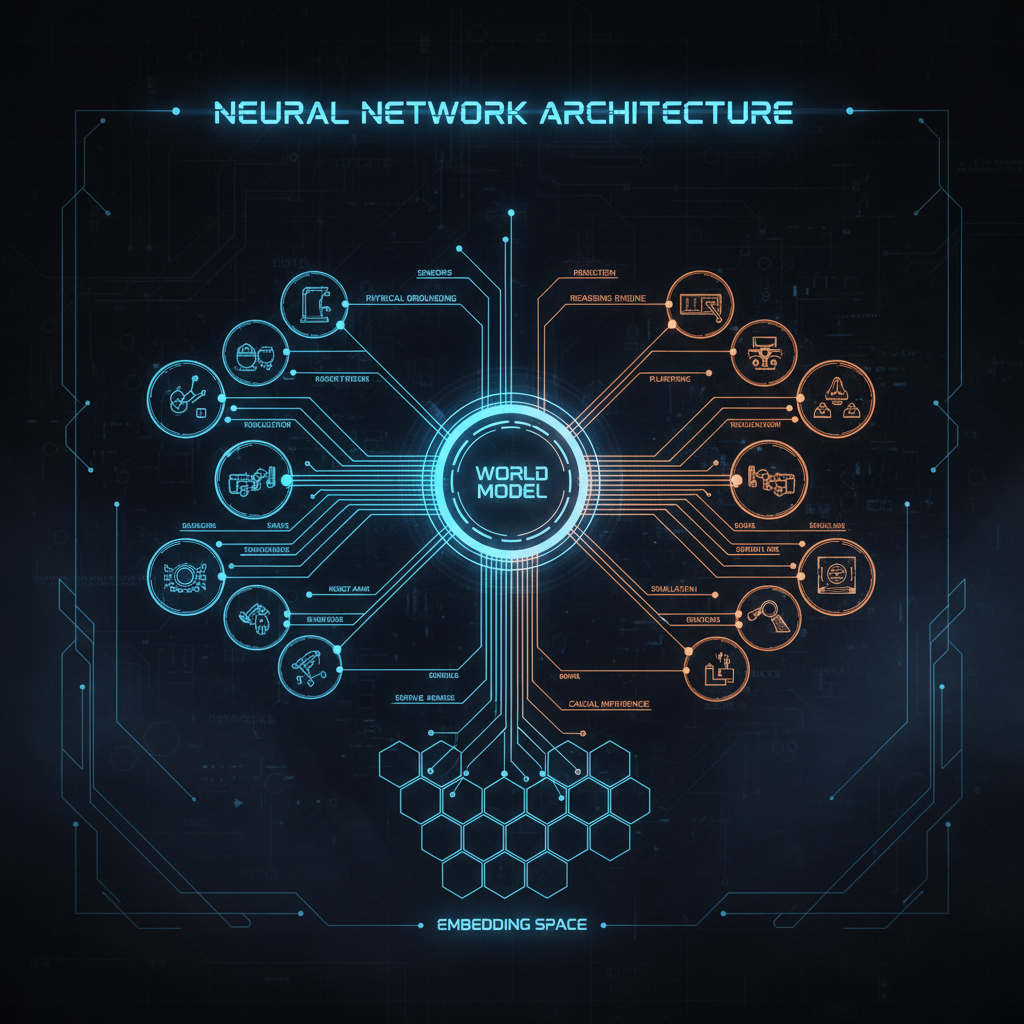

LLMs Have Hit the Wall: Why the Shift to World Models is AI’s Next Frontier

Technical visualization of World Models AI architecture

LLMs Have Hit the Wall: Why the Shift to World Models is AI’s Next Frontier The artificial intelligence landscape stands at a pivotal crossroads. Large Language Models, the technology that defined the past several years of AI advancement, are encountering fundamental limitations that scaling alone cannot resolve. While GPT-4, Claude, and Gemini continue to improve … Read more

RISC-V in 2026: The Third Pillar of Server Sovereignty

Susiloharjo

The global semiconductor landscape in early 2026 is no longer a bipolar struggle between the legacy x86 CISC (Complex Instruction Set Computing) architecture and the proprietary ARM RISC ecosystems. RISC-V in 2026 has definitively emerged as the third pillar of server sovereignty, surpassing 25% global market penetration in cloud data centers. This open-source ISA (Instruction … Read more

Zero-Trust A2A: Securing Autonomous Agent Orchestration

Susiloharjo

As the enterprise landscape of March 2026 shifts from single-agent pilots toward multi-agent orchestration, the traditional perimeter-based security model has effectively collapsed. The autonomous nature of agent-driven operations—where AI entities initiate API calls, make independent financial decisions, and interact with other models—has necessitated a paradigm shift to Zero-Trust A2A (Agent-to-Agent) Architecture. In an environment where … Read more

Neuromorphic Silicon: Beyond Von Neumann Bottlenecks

Susiloharjo

Common computing architectures based on the Von Neumann model are facing a catastrophic energy penalty. In the relentless pursuit of AI scaling, the physical separation of processing units and memory has become the primary bottleneck of modern inference. As we navigate the performance plateaus of 2026, Neuromorphic Silicon has emerged as the definitive solution to … Read more

The Death of Prompt Engineering: From Words to Intent

Susiloharjo

The Death of Prompt Engineering is not a failure of Large Language Models (LLMs), but rather a calculated evolution of intent-based architectures that prioritize latent space navigation over rigid string manipulation. For over two years, industry enthusiasts treated “magic incantations” as a core technical skill, yet the emergence of 2026-era models like Gemini 3 and … Read more