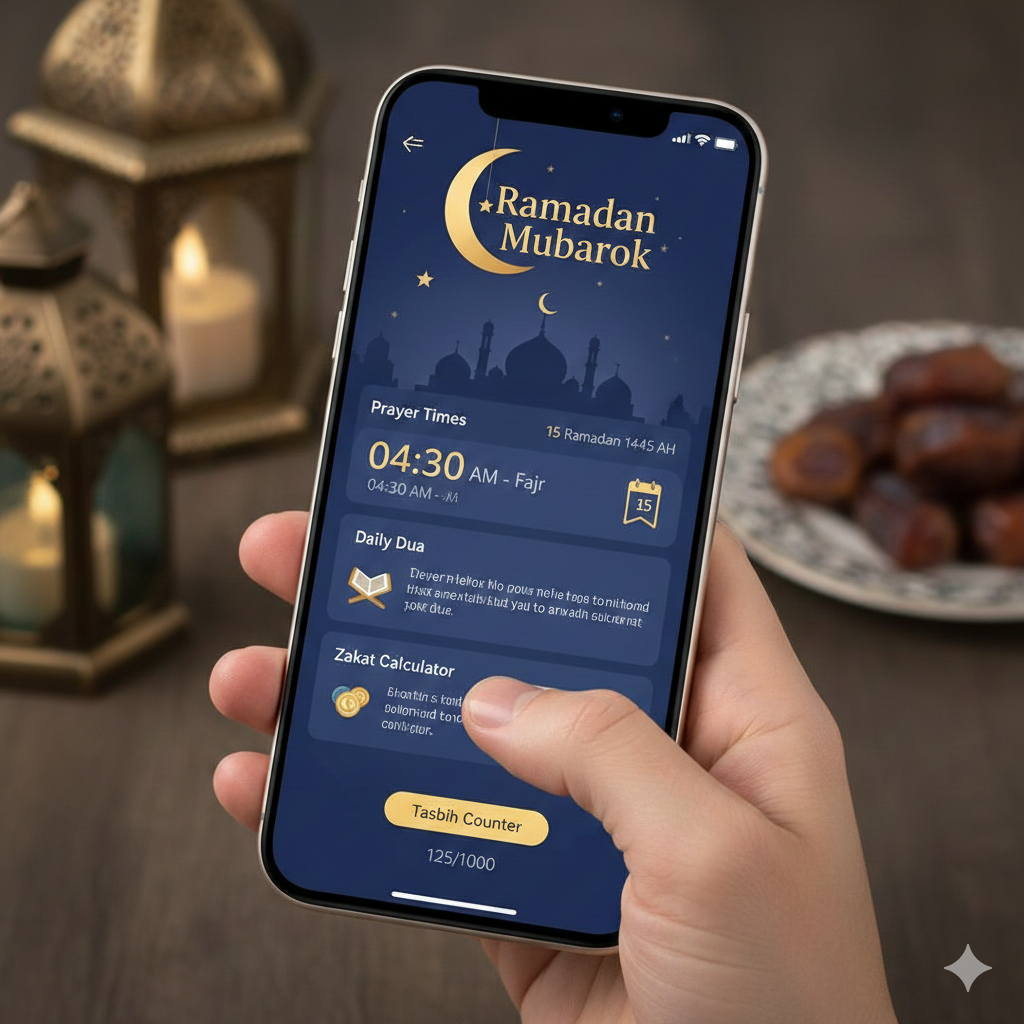
In 2026, balancing spiritual obligations with high-demand technical workflows requires more than just discipline—it requires a well-architected digital environment. As we enter Ramadan, tech professionals are leveraging a new generation of AI-powered Muslim apps and advanced wearables to maintain peak performance while fasting.
The Evolution of Prayer Time Intelligence
Legacy apps often struggled with accuracy or intrusive notifications. Today, platforms like Muslim Pro and Pillars have integrated predictive modeling to provide precision timings and location-aware scheduling. By syncing these with your terminal or project management tools, you can automate your ‘deep work’ sessions around your devotional schedule.
AI Health Trackers: Monitoring Fasting Biometrics
The latest generation of health trackers, including the Oura Ring Gen 4 and Galaxy Watch 8, now offer specific ‘Fasting Modes.’ These tools use continuous glucose monitoring (CGM) estimates and HRV (Heart Rate Variability) analysis to warn you about dehydration or cognitive fatigue before it impacts your output. For developers, this bio-feedback is essential for managing Suhoor-to-Iftar energy cycles.
Integrating Automation into Worship
Using systems like OpenClaw, I’ve automated my non-critical server maintenance to run during Iftar hours, allowing me to focus entirely on prayer during the last third of the night. It’s about letting the machines handle the mundane so we can reclaim our time for what truly matters.
Check out my previous deep-dive on Agentic Productivity to see how to build your own local-first automation stack.
Related: Mastering Ramadan 2026: Tech Productivity and Automation for the Low-Energy Prof.
Related: Mastering Document Management: Simplified Guide to Version Control and Holds.
Discover more from Susiloharjo
Subscribe to get the latest posts sent to your email.