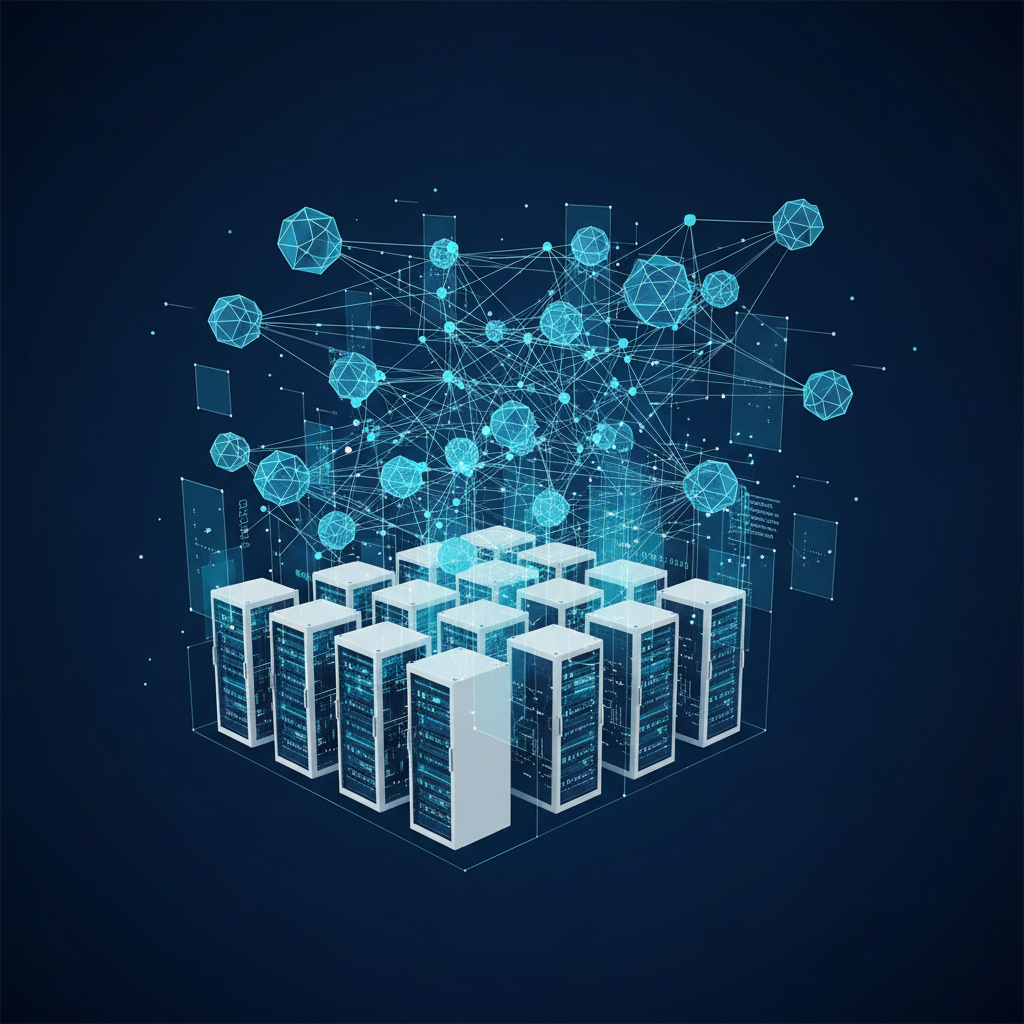
Confluent & Kafka: From Microservices to AI Data Streams
Modern enterprises face a critical infrastructure challenge: how to connect disparate microservices, legacy databases, and AI systems without creating brittle point-to-point integrations learn how data infrastructure powers AI platforms. Confluent data streaming platforms built on Apache Kafka provide the solution—enabling continuous, real-time data flow across entire technology ecosystems. This architecture pattern has become essential for organizations deploying AI agents that require fresh, contextual data to make intelligent decisions.
Understanding Confluent and Apache Kafka Architecture
Apache Kafka operates as a distributed event store and stream-processing platform, fundamentally different from traditional request-response APIs. Instead of applications querying databases for updates, producers continuously publish events to a central log, and consumers subscribe to relevant streams in real time. This event-driven approach enables scalable, decoupled architectures where systems communicate through shared data streams rather than direct dependencies.
According to Apache Software Foundation, Kafka was originally developed at LinkedIn and open-sourced in 2011, achieving graduation from the Apache Incubator in October 2012. The system uses a binary TCP-based protocol optimized for efficiency, grouping messages into sets that reduce network roundtrip overhead. This design transforms bursty random message writes into linear sequential disk operations—delivering the high throughput required for enterprise-scale Confluent data streaming deployments.
From Batch Processing to Real-Time Event Streams
Traditional data architectures rely on batch processing—collecting data over hours or days before analysis. This latency proves unacceptable for AI applications requiring immediate context. Streaming data architectures process information as it arrives, enabling organizations to react to business events the moment they occur rather than waiting for nightly ETL jobs.
Confluent extends Apache Kafka with cloud-native capabilities including autoscaling, stream governance, and managed infrastructure. Both Confluent Cloud and Confluent Platform provide enterprise-ready features built to scale seamlessly while reducing operational overhead. Confluent Cloud’s Kora engine delivers 20-90% throughput savings compared to self-managed Kafka deployments, according to Confluent Inc.
Architecture Comparison: Traditional APIs vs Event Streaming
| Feature | Traditional Request-Response APIs | Confluent Data Streaming (Kafka) |
|---|---|---|
| Communication Pattern | Synchronous request → response | Asynchronous event publication → subscription |
| Coupling | Tight (producer must know consumer) | Loose (producer/consumer decoupled via topics) |
| Data Freshness | Stale (polling intervals, cache expiry) | Real-time (events processed immediately) |
| Scalability | Limited by synchronous bottlenecks | Horizontal scale via partition parallelism |
| Fault Tolerance | Cascading failures common | Isolated failures, automatic recovery |
| AI Integration | Batch inference on stale data | Real-time context for AI agents |
Microservices Data Integration Patterns
Enterprise technology ecosystems span legacy databases, modern SaaS applications, and custom microservices. Confluent data streaming platforms connect these disparate systems through pre-built connectors and CDC (Change Data Capture) pipelines. Instead of building custom integrations for every system pair, organizations publish events to Kafka topics and subscribe relevant consumers—reducing integration complexity from O(n²) to O(n).
Database CDC pipelines capture row-level changes from PostgreSQL, MySQL, MongoDB, and mainframe systems, streaming them as events for downstream consumption. This pattern enables real-time analytics dashboards, search index updates, and cache invalidation without polling databases or modifying application code.
Event-Driven AI: Streaming Data for Intelligent Agents
AI agents require fresh, contextual data to make accurate decisions. Traditional RAG (Retrieval-Augmented Generation) systems query vector databases built from stale batch-processed documents. Event-driven AI architectures stream real-time business events directly to AI agents, enabling context-aware responses based on current system state rather than historical snapshots.
Confluent Intelligence and Streaming Agents capabilities enable organizations to automate business processes with AI powered by live data streams. Use cases include:
- Fraud Detection: AI models analyze transaction streams in real time, flagging anomalies within milliseconds rather than hours
- Personalization Engines: Recommendation systems process user behavior events instantly, adapting suggestions based on current session activity
- Operational Telemetry: AI agents monitor infrastructure metrics streams, predicting failures before they impact users
- Customer Support: Chatbots access real-time order status, inventory levels, and account changes without database queries
Confluent Data Streaming for AI Code Review Platforms
AI-powered code review systems generate enormous volumes of telemetry data: repository scan events, vulnerability detections, LLM token consumption, and execution traces. Streaming architectures capture this data in real time, enabling:
Real-time Dashboards: Security teams monitor code review throughput, vulnerability trends, and agent performance metrics as they happen—not yesterday.
Historical Trend Analysis: Long-term audit trails stored in column-oriented databases (like ClickHouse) enable queries across years of security data without impacting production systems.
Multi-Agent Coordination: Specialized AI agents (security scanner, performance analyzer, documentation checker) communicate through shared event streams, coordinating complex review workflows without central orchestration bottlenecks.
Implementation Considerations
Organizations adopting Confluent data streaming must address several architectural decisions. Topic design determines event granularity—fine-grained events (user_clicked_button) enable flexible downstream processing but increase volume. Coarse-grained events (user_session_summary) reduce throughput requirements but limit analytical flexibility.
Schema governance ensures data quality across streams. Confluent Schema Registry enforces compatibility rules, preventing breaking changes that would disrupt consumers. Organizations should establish clear ownership models for topics, defining which teams produce and consume specific event streams.
Partition strategy affects parallelism and ordering. Kafka guarantees ordering within partitions, not across topics. Applications requiring strict event ordering must route related events to the same partition using partition keys (e.g., user_id or order_id).
Industry Adoption at Scale
Financial services firms deploy Confluent for real-time fraud detection, processing millions of transactions per second with sub-millisecond latency. Retailers use streaming architectures for inventory visibility across warehouses, stores, and ecommerce platforms—enabling accurate stock levels during flash sales.
Manufacturing companies implement predictive maintenance systems streaming IoT sensor data from production lines, detecting equipment anomalies before failures occur. Telecommunications providers process network telemetry streams to optimize 5G service delivery and detect outages instantly.
According to Wikipedia, Apache Kafka introduced “Queues for Kafka” in 2025, adding share groups as an alternative to consumer groups. This feature enables queue-like semantics where consumers cooperatively process records from the same partitions—ideal for work-queue patterns while maintaining Kafka’s durability and scalability benefits.
Hybrid Architecture: Streaming + Analytics Databases
Event streaming platforms complement rather than replace analytical databases. Confluent handles high-velocity event ingestion and real-time processing, while column-oriented databases like ClickHouse store historical data for complex analytical queries. This hybrid pattern delivers both immediate responsiveness and deep historical analysis capabilities.
Kafka Connect pipelines stream events from Confluent topics to ClickHouse tables continuously, maintaining real-time synchronization. Applications query ClickHouse for trend analysis across months of data while subscribing to Kafka topics for immediate event notifications—achieving best-of-both-worlds performance characteristics.
Conclusion: Event Streaming as AI Infrastructure Foundation
Organizations building AI-powered applications face a fundamental choice: continue patching together brittle batch-processing pipelines, or invest in event-driven infrastructure designed for real-time data flow. Confluent data streaming platforms provide the foundation for AI agents that react instantly to business events, process contextual information from live systems, and scale to enterprise workloads.
The architectural pattern is clear: microservices publish domain events to Kafka topics, stream processing pipelines transform and enrich data in motion, AI agents consume real-time context for intelligent decisions, and analytical databases store historical records for trend analysis. This event-driven approach separates concerns effectively, enabling each system to focus on its core competency while communicating through standardized event streams.
For teams evaluating data infrastructure for AI initiatives, understanding Confluent and Apache Kafka represents a critical competency—one that separates scalable, real-time AI platforms from systems constrained by batch-processing latency and integration complexity explore real-time AI agent architecture.
Discover more from Susiloharjo
Subscribe to get the latest posts sent to your email.